
When people speak about Rosary Beads Wooden, they often mean something very simple: a set of beads that feels honest, modest, and solid in the hand. There is nothing flashy about a wooden rosary. It does its quiet work in the background of life, helping us keep count of prayers while our minds and hearts rest on the mysteries of Christ.

I still remember the first wooden rosary I ever kept by my bed. It was not expensive or impressive. The beads were slightly uneven, the cord a little stiff. But in a stressful season of life, that rosary became the thing I reached for before sleep and again when I woke up too early with worries on my mind. The simple feel of the wooden beads helped me slow down enough to say even one decade with some attention.
Many Catholics I know prefer wooden rosaries because they feel natural and grounded. The warmth of the wood against the fingers contrasts with metal or glass, especially on cold mornings. Over time, the beads can pick up the memory of daily handling, becoming smoother and darker in the spots most often touched. That quiet aging can itself become a reminder that prayer is not about quick results, but about showing up day after day.
Why wooden rosary beads feel different
There is a long tradition in the Church of using simple materials—wood, cord, basic metal—to make prayer tools. The rosary itself is, in many ways, a very humble object. When we choose Rosary Beads Wooden, we are choosing something that speaks the language of simplicity, rather than luxury. It is not about display. It is about the hand returning to the same beads, again and again, through joy, worry, or ordinary routine.
The rosary as a form of prayer developed over centuries, with ordinary believers using beads or knotted cords to keep track of repeated prayers. If you are curious about the wider history behind this practice, you can read more about the Catholic rosary tradition and how it took shape in different cultures. Knowing a bit of that background can make it easier to appreciate why even a simple wooden rosary carries so much meaning.
In practice, wooden beads are gentle on the fingers and usually quieter than metal chains. This can matter in family life, in shared apartments, or even at work, when you want to pray discreetly without drawing attention. The soft click of wood, especially on cord, tends to be muted, which makes it easier to keep a rosary in your pocket and pray a decade on a walk or while waiting in the car.
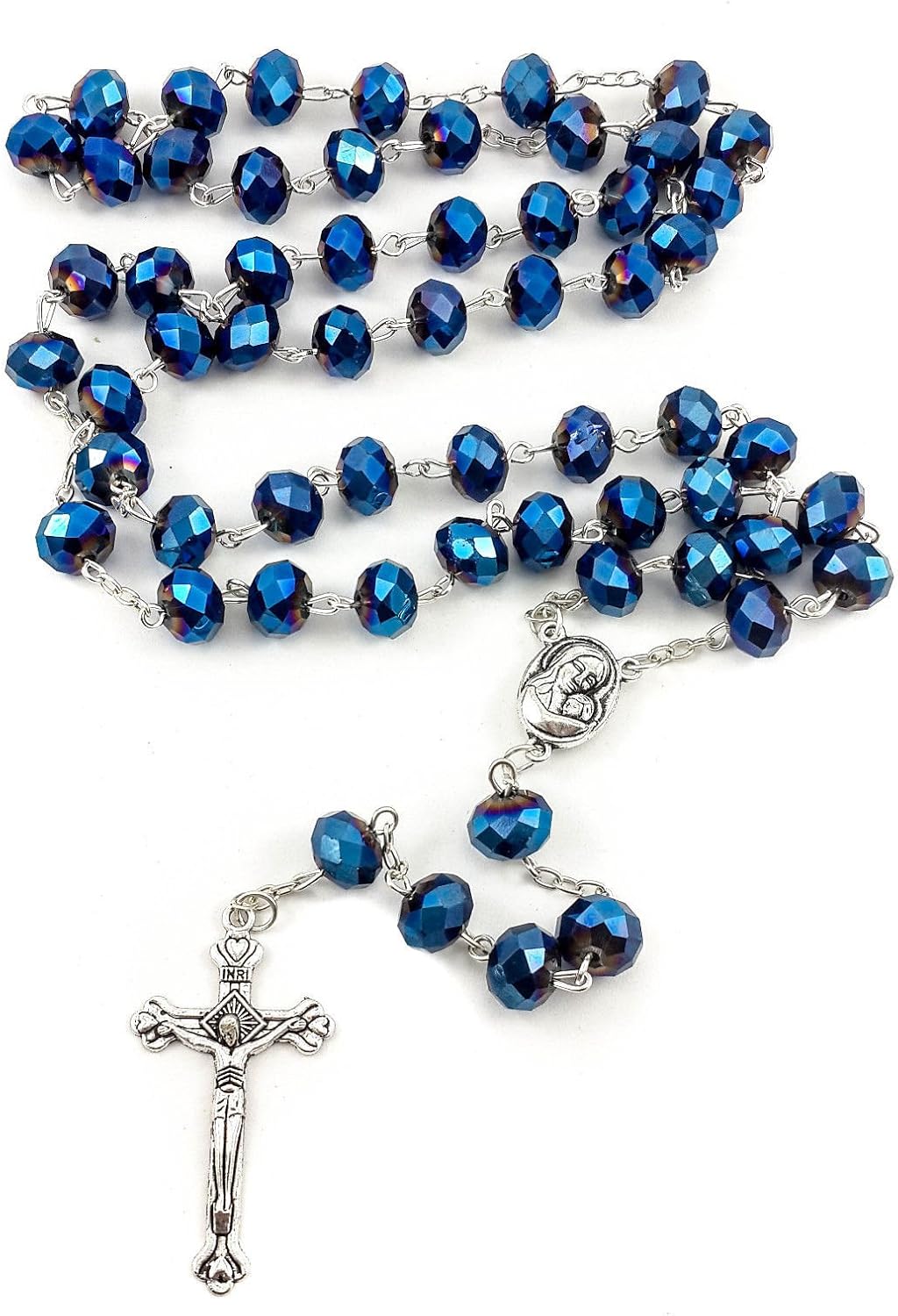
Everyday ways to use wooden rosary beads
Wooden rosaries fit naturally into the small spaces of the day. Not everyone can pray a full rosary daily. Many people simply work a decade or two into their schedule, and that is already a quiet and real way of staying close to God.
Some very ordinary, steady ways to use Rosary Beads Wooden include:
- Keeping a rosary on the nightstand and praying a short decade before sleep.
- Carrying one in a pocket and reaching for it during a break at work.
- Hanging a wooden rosary on the rearview mirror (and taking it down for actual use) as a reminder to pray on the road.
- Placing a rosary in a family prayer corner or on a small shelf with a crucifix or holy image.
- Using the same rosary each evening for family prayer, so children begin to associate it with that calm, familiar time.
In my own home, one wooden rosary stays near the entryway. It started almost by accident—I emptied my pockets one day and left it there. But now it has become a small habit to touch it briefly before leaving the house, whispering a short prayer for the day’s tasks. It is not dramatic or intense, just a moment to remember that I do not face the day alone.

Types of wooden rosary beads you may notice
Looking at different Rosary Beads Wooden, you will see a variety of styles. None of them is “better” in a spiritual sense. The most important thing is whether a particular rosary helps you settle into prayer with some peace and focus.
Polished and smooth wooden beads
Many wooden rosaries have smoothly polished beads that slide easily through the fingers. These can feel especially gentle if you like to pray longer rosaries or often repeat certain prayers. The smoothness can make it easier to move from bead to bead without distraction.
Matte or rustic wooden beads
Other rosaries use more natural, slightly rougher wood. The beads may show visible grain or small variations. Some people appreciate this rustic look and feel, seeing in it a reminder that faith is lived in the reality of ordinary, imperfect life. The texture under the fingertips can help some minds stay present and less likely to drift.

Wooden rosaries with cord
Corded rosaries, where the beads are strung on durable cord instead of metal chain, are common for wooden beads. They tend to be quiet, flexible, and less likely to tangle. Many people choose them for children or for carrying in a pocket, backpack, or purse, since they handle rough use reasonably well.
Wooden rosaries with chain links
Some wooden rosaries use metal chain between the beads. This can give a more traditional look while keeping the soft feel of wood. The chain adds a slight weight and movement, which some people find helpful as they handle the rosary slowly during prayer.

Personal stories and quiet routines
Over time, a wooden rosary can become closely tied to particular seasons of life. For a while, I kept a small set of Rosary Beads Wooden in the car specifically for hospital visits to a relative. I would sometimes pray only a decade each way, not always with great focus, but with a steady, simple intention. That little rosary still reminds me of those drives—of worry, yes, but also of being held quietly by God in the middle of them.
You may find that certain rosaries carry family memories. Perhaps a parent or grandparent used a wooden rosary during evening prayers, or a godparent gave one at a baptism or confirmation. The beads themselves do not hold power, but they do hold memory. When those memories are linked to prayer, they can make it easier to return to the rosary when life feels scattered or heavy.
For some people, wooden rosary beads also become part of dealing with stress or sleeplessness. The steady movement from bead to bead can calm breathing and gently redirect anxious thoughts, even when the mind feels scattered. There is no need to force emotions or expect quick changes. Simply naming intentions and repeating the familiar prayers can create a small space of stillness.
Caring for wooden rosary beads
Because wood is a natural material, it benefits from gentle care. In most cases, Rosary Beads Wooden do not need complicated maintenance. A simple approach is usually enough:
- Keep the rosary in a small pouch, drawer, or box when not in use, to avoid tangles and dust.
- Wipe it occasionally with a soft, dry cloth to remove any surface dirt.
- Avoid soaking it in water or leaving it for long periods in a very damp place.
- Keep it away from harsh cleaning products, which can dry or damage the wood.
- If the wood becomes very dry, a tiny amount of gentle oil on a cloth can be rubbed in lightly, then wiped off.
Some people find that visible wear on their wooden rosary—the darkened beads, the softened edges—becomes a quiet sign of the prayers said over time. It reminds us that spiritual life is not about perfection, but about steady, ordinary faithfulness.

Choosing wooden rosary beads that fit your life
When thinking about Rosary Beads Wooden, it can help to reflect quietly on how and where you usually pray. If your prayer time happens mostly at home, a slightly larger, more traditional rosary might feel comfortable. If you tend to pray on the go—walking, commuting, sitting in waiting rooms—a smaller pocket rosary may be easier to keep with you.
You might ask yourself:
- Do I prefer light or dark wood? Which feels more peaceful to me?
- Do I like the feel of smooth beads, or do I prefer a more textured surface?
- Will this rosary mostly stay in one place, or travel with me?
- Do I want a simple wooden cross, or a slightly more detailed crucifix?
There is no “correct” answer. The right rosary for you is usually the one you will actually reach for—during good days and hard days, in quiet and in hurry, without pressure.
