Getting started
A simple introduction to rosary beads
When I first tried to understand Rosary Beads How to Use, I honestly felt a bit lost. There were so many beads, different prayers, and people around me who seemed to know exactly what to do. I quietly carried my rosary in my pocket for weeks before I actually prayed a full decade.
Over time, I discovered that rosary beads are simply a way to keep your hands gently busy so your heart can rest in prayer. You do not have to get every detail perfect from the start. What matters most is the quiet intention behind each bead you touch.
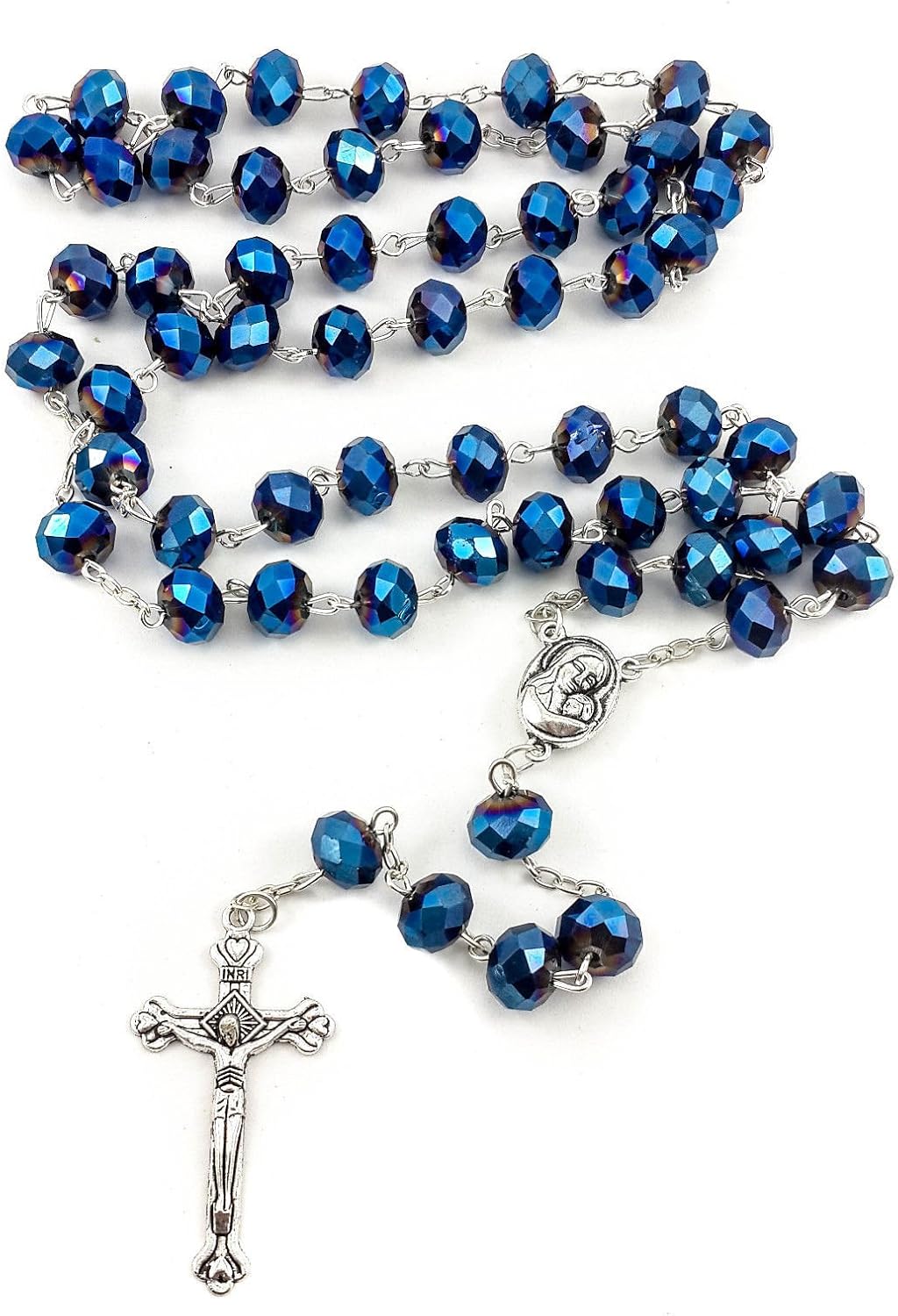
Rosary beads usually have a crucifix, one short section of a few beads, and then a loop of five “decades.” A decade is one larger bead followed by ten smaller beads. Each part of the rosary has its own place in the rhythm of the prayer, but it all unfolds one bead at a time.
Many Catholics keep rosary beads in their pocket, purse, car, or by the bedside. Some pray all five decades daily. Others pray one decade here and there, fitting prayer into real life with work, family, and responsibilities. None of it needs to feel dramatic or impressive. It can be as simple as picking up the beads when your heart feels heavy or grateful.
Step by step
Rosary Beads How to Use: the basic flow
Learning Rosary Beads How to Use becomes much easier once you see the basic pattern. You start at the crucifix and move slowly around the entire circle of beads. Each bead is like a little stepping stone that carries you forward without rushing.
1. Begin at the crucifix
You start by holding the crucifix between your fingers. Many Catholics make the Sign of the Cross and then pray the Apostles’ Creed. If you do not know it by heart yet, you can simply hold the crucifix for a moment and tell God, in your own words, that you are here and ready to pray.
2. Move through the first small section
After the crucifix, there is usually one larger bead followed by three smaller ones, then another larger bead leading to the centerpiece. On these beads, Catholics commonly pray an Our Father on the larger bead, three Hail Marys on the smaller ones, and a Glory Be on the next larger bead.
If you are still learning, you can take it slowly: maybe start with just the Our Father bead and a few simple words of your own on the others. God is not watching to grade you; He knows you are learning.
3. Walk through each decade
From the centerpiece, you enter the loop of five decades. Each decade has:
- One larger bead (for the Our Father)
- Ten smaller beads (for ten Hail Marys)
Before each decade, Catholics usually “announce a mystery,” remembering a moment from the lives of Jesus and Mary. This is where the rosary gently connects everyday life with the Gospel. If you want to know more about this traditional set of reflections, you can read about the Rosary tradition and see how it has developed over centuries.
As you go around the circle, you simply repeat the pattern: announce the mystery, pray the Our Father on the larger bead, then ten Hail Marys on the smaller ones, often followed by a Glory Be and, if you wish, other short traditional prayers.
Personal rhythm
Bringing the rosary into daily life
For me, understanding Rosary Beads How to Use really clicked when I stopped treating it like a performance and started seeing it as a gentle background to my day. I remember one evening sitting in the car outside the grocery store, feeling overwhelmed. I reached for the rosary in the console and prayed just one decade before going inside. That quiet pause changed the tone of the rest of my night.
Rosary beads can fit naturally into many everyday moments:
- During a commute, with the car radio off or softly playing in the background
- On a walk around the neighborhood or at a park
- In a waiting room, when anxiety starts to rise
- Before bed, in the quiet of a dim room
- Early in the morning, before the rest of the house wakes up
You do not need to finish all five decades at once. Some people spread them through the day: two in the morning, one at lunch, two at night. Others often manage only a decade here and there. The rosary is patient. It will wait for you.
On busy days, I sometimes find myself fingering the beads in my pocket without even saying full prayers out loud, just whispering short phrases in my heart: “Lord, be with me,” “Thank You,” or “Help them.” Even that quiet contact with the beads reminds me that I am not alone.
Gentle reminder: if you lose count or get distracted, you can always start again on the next bead. The goal is not perfection but presence.
Choosing beads
Different kinds of rosary beads and their feel
As you explore Rosary Beads How to Use, you will probably notice how different rosaries feel in your hands. The material, the weight, even the sound they make when you move them can shape how you experience prayer.
Wooden rosary beads
Wooden beads often feel warm and natural. They can remind you of the simplicity of the Holy Land or of the cross of Christ. Many people appreciate how light they are, especially for carrying in a pocket. Over time, the wood can even wear slightly under your fingers, like a quiet record of your prayers.
Glass or crystal rosary beads
These beads can catch the light in a way that feels quietly beautiful. Some Catholics choose them for special intentions, like praying for family or a particular need. They can feel a bit heavier in the hand, which some people like because it helps them focus and slow down.
Metal, stone, or other materials
Metal rosaries can be very durable, especially if you tend to keep your beads in a bag or car. Stone beads have a cool, solid feel that can bring a sense of steadiness during anxious moments. There are also rosaries with scent beads, like rose or other fragrances, that gently remind you that prayer touches all the senses.
For me, one turning point in learning Rosary Beads How to Use was finding a set that simply “disappeared” in my hands, so I could stop thinking about the beads themselves and rest more in the prayer. You may find that one particular style quietly becomes “yours.”
Heart of the prayer
Staying focused while you pray the rosary
Nearly everyone who learns Rosary Beads How to Use wrestles with distractions. Thoughts wander to work, family, worries, or even what to make for dinner. This does not mean you are failing at prayer. It simply means you are human.
Here are a few gentle ways to stay present while using your rosary beads:
- Pray slowly. Instead of rushing, let each word settle. It does not matter how many decades you finish, but how honestly you pray.
- Add a simple intention. Before each decade, quietly name a person or situation you want to hold before God.
- Use your breath. As you move each bead, breathe in and out slowly. Let your breathing join the rhythm of the prayers.
- Pause if needed. If your mind is very restless, it is okay to pause the rosary and simply sit with God in silence for a moment.
I remember one particularly stressful week when I could not get through more than five Hail Marys before my mind scattered. Instead of forcing myself, I just held the centerpiece of the rosary, breathed slowly, and said, “Lord, You know.” That imperfect little moment became one of the most honest prayers I prayed that week.
Quiet traditions
Using rosary beads with family and friends
Part of learning Rosary Beads How to Use is discovering that this prayer is often shared. Many families, parishes, and small groups gather to pray the rosary together, sometimes in person, sometimes over the phone or online.
In my own experience, praying the rosary with others has been both humbling and comforting. There are days when I am tired and can barely focus. Hearing someone else lead the prayers and simply following along with my beads in hand helps me keep going even when I feel weak.
Some ways people use rosary beads together include:
- Gathering as a family in the living room for one or two decades
- Praying the rosary during long drives, with someone leading and others responding
- Joining a small group at church before or after Mass
- Calling or video chatting with a friend or relative to pray together when distance separates you
Children sometimes start with a single decade or even just learning to hold the beads reverently. The point is not to force long prayers, but to gently introduce a rhythm of turning to God together.