
When I think of Rosary Beads and Cross, I do not picture something fancy or distant. I picture the set of beads that rests on my nightstand, a little worn from years of being held during late-night worries and early-morning thank‑yous.

Over time, the rosary has become part of the furniture of my day. I do not always manage a full set of mysteries, and I often get distracted, but just having the beads nearby seems to invite me back into prayer when my mind has wandered far away. The cross at the end of the rosary is usually where I pause the longest. I hold it a little tighter and let the silence stretch, even if only for a breath or two.
In American Catholic homes, rosary beads are often present even when they are not always used perfectly or regularly. They can hang from a wall, sit in a small bowl by the door, or stay tucked in a drawer. Yet when something hard happens—a medical test, a family worry, a sleepless night—those same beads and that little cross often find their way back into our hands.
The quiet meaning of rosary beads and cross
The rosary has centuries of history behind it, but what matters most in daily life is how simple it remains in the present moment. Each bead is just a small step, one prayer at a time. The cross at the end is a reminder that we are never praying alone, even when we feel alone.
I have noticed that the rosary feels different in my hands depending on the season of life. In peaceful times, it feels light, almost like a gentle rhythm. In hard times, it feels heavier, like something to cling to. The cross, especially, takes on new meaning when there are burdens I do not know how to put into words. Sometimes, all I can do is hold the cross and sit quietly. That, too, can be a kind of prayer.
Rosary beads as part of an ordinary routine
Many Catholics weave the rosary into the small corners of the day:
- Praying a decade in the car during a morning commute.
- Holding the cross for a few seconds before starting work.
- Praying slowly in the evening when the house finally becomes quiet.
- Walking around the neighborhood with beads in a pocket, praying silently.
There is no single “right” schedule that fits everyone. For me, there was a time when I tried to force a perfect daily routine and ended up feeling discouraged. What helped was giving myself permission to begin with one decade, or even just holding the cross and whispering a simple prayer. The rosary remained the same; what changed was the way I approached it—with less pressure and more honesty.
Different styles of Rosary Beads and Cross
When people look for rosary beads, they often notice how many different designs exist. Some are very simple, with plain beads and a modest metal crucifix. Others include wood, stone, glass, or special medals. There are pocket rosaries with one decade, full five-decade rosaries, bracelet rosaries, and wall rosaries.
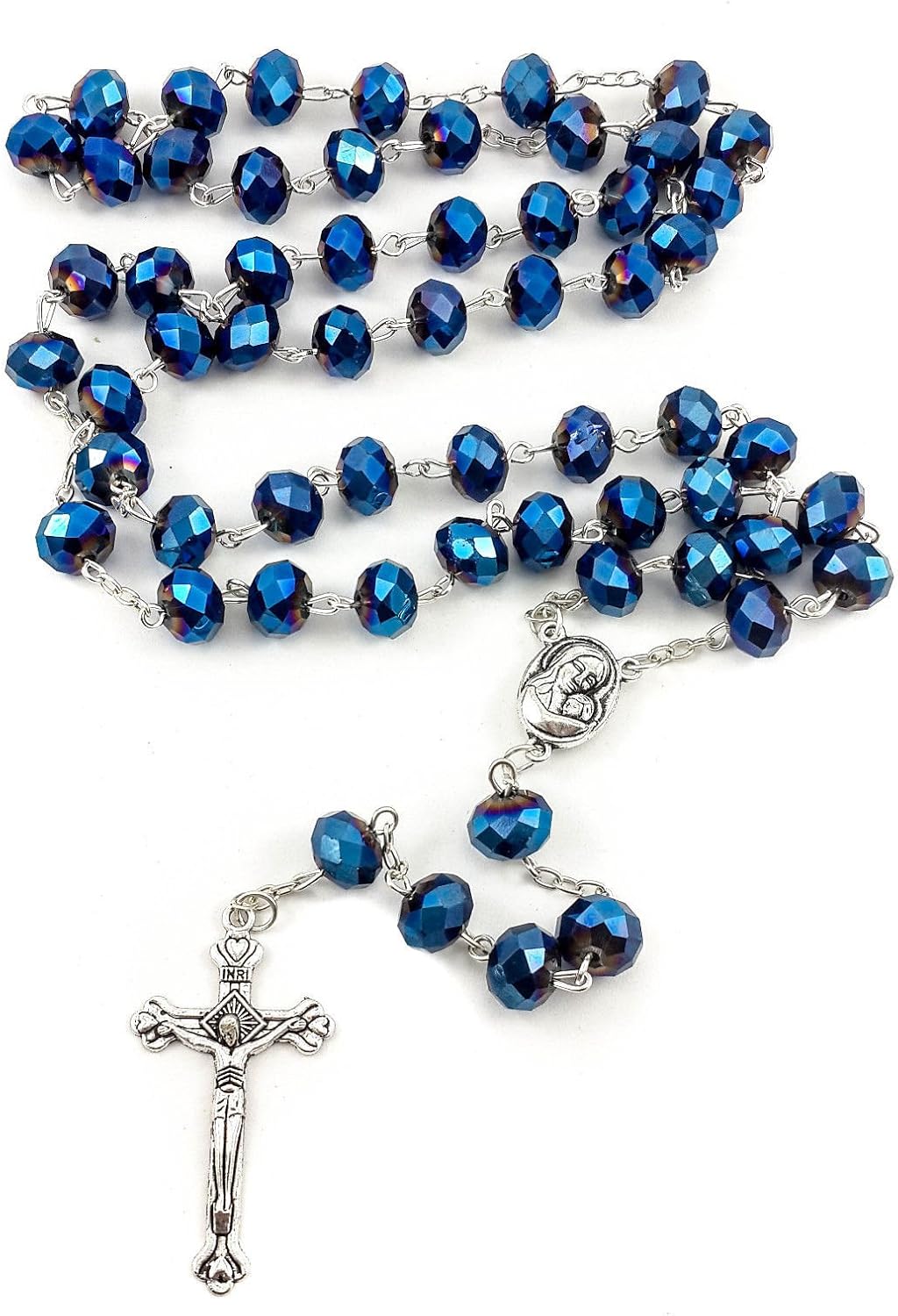
The choice of style often has less to do with appearance and more to do with how the beads feel in the hand, and how they fit into someone’s life. For example:
- Wooden beads can feel warm and natural. They tend to be light, which makes them comfortable to hold for longer periods.
- Glass or crystal beads can catch the light and remind someone of the beauty of prayer, even when life feels heavy.
- Metal rosaries can be sturdy and long‑lasting, suitable for carrying around every day.
- One‑decade rosaries or bracelets can be easier to use discreetly in public or at work.
The cross itself can also vary. Some are very plain, while others include more detailed figures or engravings. I remember one set of rosary beads and cross that I carried for years; the metal on the corpus became faded where my thumb always rested. That small worn spot ended up meaning a lot to me. It was a quiet sign of how often I had turned there in worry, gratitude, or simple habit.

Using rosary beads and cross in different places
One of the practical gifts of the rosary is how portable it is. Rosary beads and cross can quietly accompany us into many different settings without drawing attention or needing a lot of preparation.
At home
Many families keep a rosary in a place where it is easy to reach: a bedside drawer, a living room basket, or next to a favorite chair. Some set aside a small “prayer corner” with a crucifix, a candle, and a rosary. That space does not have to look perfect. Even a simple shelf with a cross and a set of beads can mark a place of calm in a busy house.
In my own home, there is a small spot on a bookshelf where a rosary hangs beside a simple cross. It is not dramatic; most visitors probably do not notice it. But when I pass by in the middle of a hectic day, it quietly reminds me that I can pause, even for a minute, and breathe a prayer rather than just push through on my own strength.
On the road
Many Catholics keep rosary beads in the car or in a bag. A rosary hanging from a rearview mirror or resting in a console can encourage prayer during traffic, long drives, or unexpected delays. The cross at the end can be something to touch gently before starting the engine, asking for guidance and protection for the journey ahead.

I still remember waiting in a hospital parking lot once, rosary in hand, unable to focus enough to form many words. I moved my fingers along the beads anyway, holding the cross for longer than usual. It did not erase the worry, but it felt like I was not carrying it entirely alone. That quiet companionship of prayer is something I have felt often with the rosary.
At work or in public
For those who want to keep their faith close but low‑key, a small one‑decade rosary or a bracelet can be helpful. It can stay in a pocket or on a wrist, available during a short break, a walk between meetings, or a lunchtime moment alone. The cross, even when very small, still anchors the prayer.
There is something steadying about reaching into a pocket during a stressful moment and finding those familiar beads. Even if all you can manage is a single Hail Mary or a simple “Lord, stay with me,” the rosary beads and cross can turn that moment into a quiet pause with God instead of just more stress.
Choosing Rosary Beads and Cross for real life
When selecting rosary beads and cross, it can help to think less about trends and more about how you actually live:
- Where will you keep it? By the bed, in a bag, on a prayer table, or in the car? This can affect whether you prefer something delicate or more durable.
- How will you pray with it? Long, quiet times at home may suit a more traditional five‑decade rosary. Short breaks during the day may call for a smaller or simpler style.
- What feels good in your hands? Smooth wooden beads, cool glass, or sturdy metal—each has its own feel. It can be worth choosing a texture that gently invites you to pick it up.
- Do you prefer a subtle look? Some people like a rosary that is barely noticeable in public, while others appreciate something more visible at home.

One of my own sets of rosary beads and cross is very simple, with plain dark beads and a small metal crucifix. Another is slightly more decorative, given to me on a special occasion. I tend to reach for the simpler one on everyday mornings, and the other during retreats or quiet weekend afternoons. Both serve the same purpose; they just fit different moments in life.
It can help to remember that the value of a rosary is not in how much it costs or how impressive it looks, but in the steady, humble way it supports prayer. Even a very simple set of beads and a small cross can become precious over time, simply because of the prayers that have passed through it.
Praying with rosary beads when life is messy
Many of us imagine the “perfect” rosary prayer: quiet, focused, uninterrupted. Real life rarely looks like that. Children interrupt, phones buzz, thoughts wander, and sometimes we are simply tired. Yet in those imperfect moments, rosary beads and cross can still be anchors.
I have lost my place countless times, skipped decades, or simply held the cross without saying much. Over the years, I have come to believe that God is less concerned with our perfect structure and more with our willingness to turn toward Him in whatever state we are in—distracted, anxious, or half‑awake.
Some practical ways to use the rosary in a messy schedule:
- Pray one decade while walking the dog.
- Offer a single decade for someone who asked for prayers.
- Hold the cross for a moment whenever you feel overwhelmed.
- Keep the rosary nearby at night for sleepless hours.

There was a time when I kept my rosary under my pillow because anxiety made it hard to sleep. I would wake up in the middle of the night, reach for the beads almost without thinking, and trace a few prayers in the dark. Sometimes I finished a whole set of mysteries. Sometimes I fell asleep halfway through a Hail Mary. In both cases, the beads and cross were simply there, steady and patient.

FAQ about Rosary Beads and Cross
If you feel drawn to keep rosary beads and a cross closer in your daily life, you can quietly explore different options and notice which ones seem to invite you into prayer.
Show me everything