

Many of us first hear about rosary prayer through family, parish life, or a quiet invitation from a friend. Medjugorje wooden rosary beads often enter our lives just as quietly. They are simple, a bit rustic, and usually not perfect. Maybe that is why they feel so close to everyday life, where nothing is perfectly arranged but God is still present.
When I first prayed with Medjugorje wooden rosary beads, I was surprised by how “ordinary” they felt. The wood was not polished like fine jewelry. The cord was simple. But that ordinariness helped me focus. I was less distracted by how the rosary looked and more attentive to the rhythm of the prayers and the mysteries of Christ.
Wooden beads also have a certain warmth. Over time they pick up small marks from being carried in pockets, bags, and hands. I have one Medjugorje rosary where the crucifix has a tiny dent from when it slipped off a table. Every time I see it, I remember that moment and the prayer I was trying to say while tired after a long day. These little signs of use almost become a quiet history of prayer.
Why Wooden Medjugorje Rosaries Feel So “Lived In”
Medjugorje wooden rosary beads are often made in a very straightforward way: simple beads, a cord or chain, a small centerpiece, and a crucifix. They are not meant to impress. Instead, they are meant to be handled, carried, sometimes forgotten in a jacket pocket, and then found again during a difficult week.
This is what makes them good companions for daily life. They do not demand attention. They simply “wait” for you to pick them up. On busy mornings, you might only manage a decade on the way to work. In the evening, you might finish the rest while sitting on the couch or walking around the block. The rosary does not judge the pace; it just helps you keep going.
Praying With Medjugorje Wooden Rosary Beads Day by Day
In a typical American day, prayer can easily get squeezed between responsibilities: work, family, appointments, screens, and worries. A simple wooden rosary in your pocket or bag can be a gentle reminder that you can turn to God at any moment, even when life feels scattered.
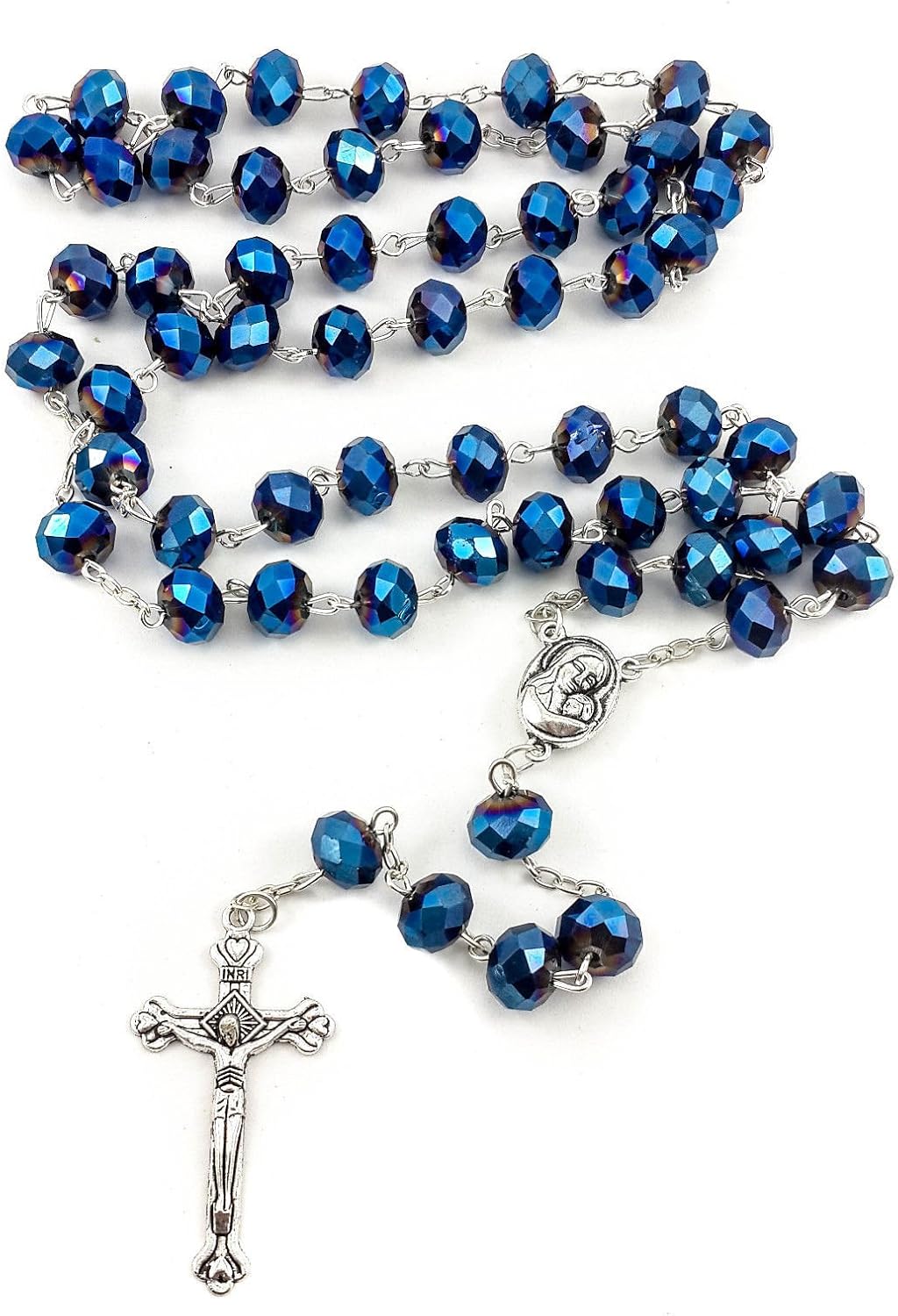
Some people like to pray a full five-decade rosary in one sitting. Others spread it out during the day. When I am commuting or walking, I sometimes hold my Medjugorje wooden rosary beads in my pocket, moving from bead to bead without taking it out. It does not draw attention, and yet it keeps my heart anchored in prayer while my body is on the move.
At home, a wooden rosary can rest on a nightstand or hang near a crucifix on the wall. Seeing it there when you turn off the light can be enough to remember a short Hail Mary or to thank God for a quiet blessing that day. It does not have to be complicated. Often, the most honest prayers are the simplest: “Lord, be with me,” “Please help my family,” “Mary, stay close to my children.”
On difficult days, when prayer feels dry or scattered, having beads to hold can be a small comfort. You may not feel anything special, but you can still move from bead to bead, letting the familiar words guide you. Many Catholics experience long stretches like this. The rosary, especially one that feels familiar in your hand, helps you keep showing up, even without strong feelings.
What Makes a Rosary “From Medjugorje” Different
Rosaries connected with Medjugorje usually come from local artisans, religious communities, or small workshops in that area. Often they include a small medal or centerpiece that mentions Medjugorje. Some are made from local wood or feature specific colors or images associated with that place.

For some people, having beads from a particular place, like Medjugorje, is a reminder of a visit or of someone else’s pilgrimage. For others, it is simply a sign that their prayer is connected with the wider Church around the world. In my case, my first Medjugorje wooden rosary beads were a gift from a friend who had traveled there. I remember him saying, “I thought you might like something simple to pray with.” Whenever I use that rosary, I think of his quiet kindness.
The value is not in the origin itself, but in how you use the rosary. Whether you have been to Medjugorje or not, beads from there can become part of your own story with God: nights of worry, mornings of gratitude, long drives, hospital waiting rooms, or peaceful walks after dinner. Over time, what matters is not where the rosary came from, but the prayers that passed through it.
Choosing Medjugorje Wooden Rosary Beads for Your Life
When considering Medjugorje wooden rosary beads, it can help to think about your real routines: where you work, how you travel, how you pray, and where you tend to keep small personal items. A very delicate rosary might not be the best for pockets. A stronger corded one might serve better if you plan to carry it everywhere.

Some people prefer slightly larger beads that are easier to feel, especially if they often pray in the dark or while walking. Others like smaller beads that can be wrapped around the wrist or tucked into a small pocket in a bag. The finish of the wood also matters: smooth beads glide more easily, while more textured beads can give a stronger sense of movement from one prayer to the next.
I once chose a set of Medjugorje wooden rosary beads simply because the crucifix reminded me of the crucifix in my childhood parish. It was not a special design, just very familiar. That connection to my own story helped me reach for that rosary more often. Small details like that—what the cross looks like, how the centerpiece feels, the color of the cord—can make a difference in how naturally you reach for the beads in daily life.
Using Medjugorje Rosaries With Family and Friends
Wooden rosaries are gentle for family prayer because they are sturdy and not too delicate. Children can hold them, and if they drop them, it usually does not cause much damage. Having a basket or small box with several sets of Medjugorje wooden rosary beads can make it easier to invite everyone in the house to join for a decade, especially during certain seasons like Lent or Advent.

When praying with kids, the beads can help keep small hands focused. You might not complete all five decades, and that is okay. Even a single decade, prayed slowly and simply, can be meaningful. Over time, the children may begin to associate those beads with a sense of safety and peace, even if they do not fully understand every word.
Medjugorje wooden rosary beads can also be a thoughtful gift for someone who is quietly going through a hard time: illness, grief, work stress, or family struggles. You do not need to say much. Sometimes just saying, “I thought this might help you pray when you feel ready,” is enough. The gift of a rosary is really an offer of prayer and presence, not pressure.
Caring for Your Medjugorje Wooden Rosary Beads
Wooden rosaries benefit from gentle care. Keeping them away from water, perfumes, and harsh cleaners will help the beads and cord last longer. If the wood seems dry, some people very lightly rub it with a soft cloth. Over time, the natural oils from your hands usually give the beads a soft sheen.
It is normal for rosaries that are used often to show signs of wear. A bead may darken, the cord may soften, small scratches may appear. I have one Medjugorje wooden rosary where a bead eventually cracked after many years. Instead of feeling upset, I felt oddly grateful: it had clearly been prayed with a lot. If a rosary does eventually break, many people choose to keep part of it near a prayer corner or in a small box as a reminder of all the prayers that passed through it.
Storing your rosary in a small pouch or case can protect it when you carry it in a bag or backpack. This is especially helpful if you keep keys, coins, or other objects nearby that might tangle with the chain or cord. A simple cloth bag is enough; it does not need to be fancy.
Quiet Moments With Medjugorje Wooden Rosary Beads
There is a special kind of peace that comes from holding the same beads again and again over the years. I remember one evening, sitting in the parking lot outside a hospital, waiting for news about a family member. I had my Medjugorje wooden rosary beads in my hand and could barely form words. I simply held the crucifix and repeated a few Hail Marys slowly. Nothing dramatic happened. But I did not feel alone.

Experiences like that are not about feelings of certainty or special signs. They are about showing up before God as you are, with what you can manage in that moment. The steady feel of the beads can be a small support, like holding the hand of a trusted friend in the dark. The rosary does not take away suffering, but it can help you bring that suffering into prayer.
Over the years, Medjugorje wooden rosary beads can become tied to specific memories: a child’s confirmation, a long drive across states, a sleepless night with a sick baby, a joyful Thanksgiving, a quiet walk at sunrise. The beads themselves do not cause grace, but they can remind you that God was present in all those moments, even when you did not notice at the time.

Letting the Rosary Grow With You
One reassuring thing about the rosary is that you do not have to pray it “perfectly.” You may start with just a decade on Sundays. Later, you may find yourself reaching for your Medjugorje wooden rosary beads more often, maybe adding another decade during the week, or praying full mysteries during particular seasons. Your way of praying can grow slowly, with your life.
There will be times when you feel close to God and times when you feel distant. Times when the words flow easily and times when they feel heavy. Through all of this, the beads wait patiently. They do not measure your progress; they simply offer a path back to prayer whenever you are ready to take it again.
If you already have a favorite rosary, a Medjugorje wooden one can simply become another option, maybe the one you use when traveling or when you want something especially simple in your hands. If you are just starting to pray the rosary, a straightforward wooden set can be a calm and approachable way to begin.