

Irish Rosary Beads in everyday Catholic life
When people talk about rosary prayer, they often think of saints, monasteries, and long hours of devotion. But for many of us, especially in American families with Irish roots, Irish rosary beads feel much closer to home. They rest on a nightstand, hang from a bedpost, or slip into a coat pocket before a long day.
I still remember the first set of Irish rosary beads I ever held. They belonged to my grandmother. The beads were a deep green, a little worn in places, with a small shamrock near the center. She never talked much about prayer, but every night, after the dishes were done and the house was quiet, you could hear the faint sound of those beads slipping through her fingers. That memory has stayed with me more than any long explanation ever could.
Irish rosary beads often carry that mixture of faith and heritage. The green tones, Celtic knots, shamrocks, and sometimes even tiny Claddagh symbols remind us of a people who learned how to hold onto hope through hardship. When we use them today, we are not adding something dramatic to our lives; we are simply joining a quiet line of believers who have done the same thing for generations.
Whether you come from a strong Irish background or simply feel drawn to the sense of rootedness they represent, these beads can become a simple tool for prayer. Not as a lucky charm, and not as something magical, but as a steady way to place your day before God, one bead at a time.
Common designs and materials you may find
Irish rosary beads come in many forms, but a few patterns show up again and again. Understanding these can help you find a set that feels honest and natural in your hands.
Green beads and the memory of Ireland
Many Irish rosaries feature green beads, sometimes glass, sometimes stone, sometimes smooth plastic. The color is obvious, of course, but it still has a quiet beauty to it. Green can remind us of the Irish countryside, of shamrocks and St. Patrick, and of the steady growth of faith through time.
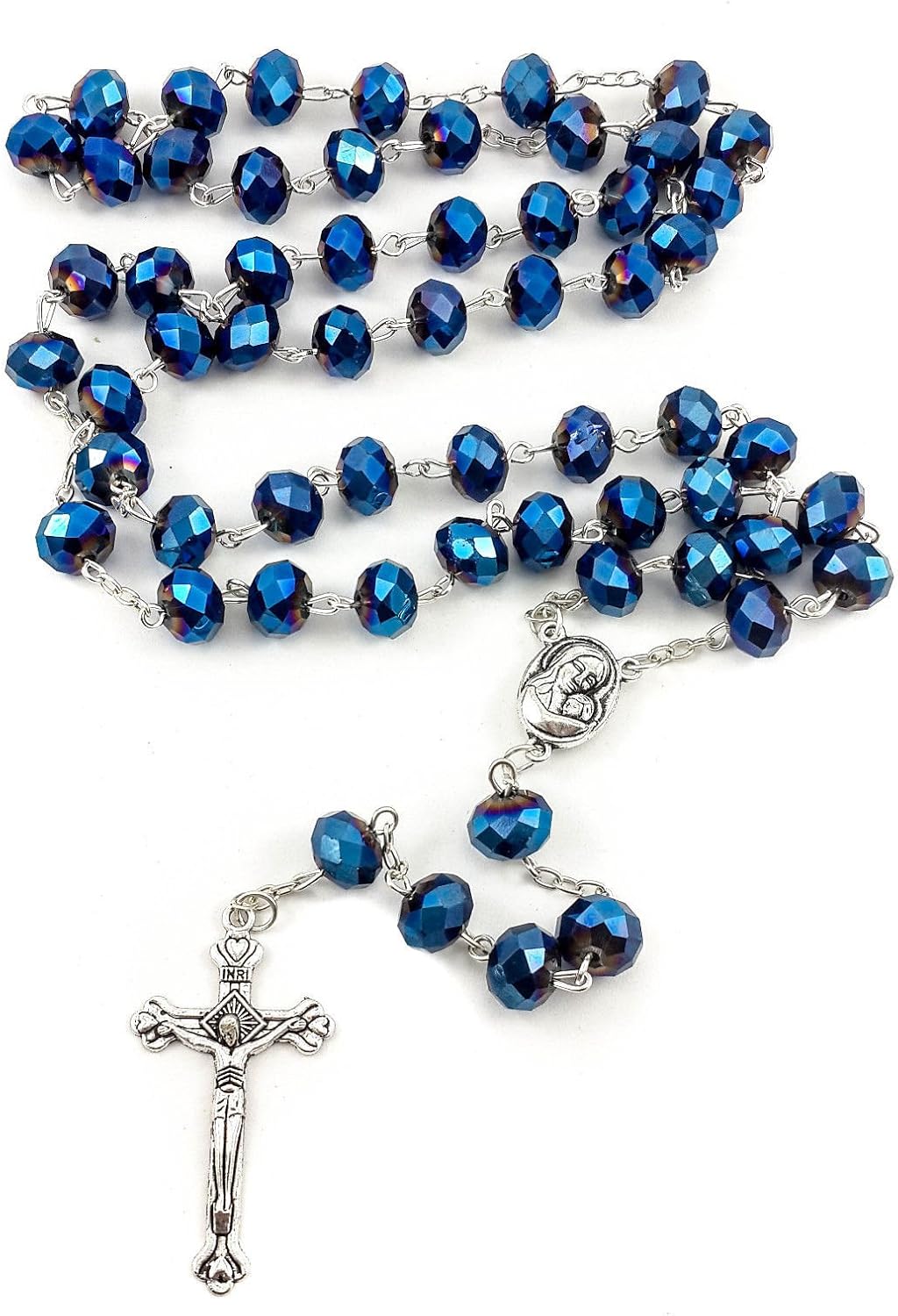
I once carried a small set of Irish rosary beads with pale green stones during a difficult season at work. I did not pray the full rosary every day; some days I only managed a decade in the car before going inside. But just feeling those familiar beads in my pocket reminded me that I was not standing in that day alone.
Celtic crosses and knotwork
Another common feature on Irish rosary beads is the Celtic cross. Its circle and arms, wrapped in intricate knotwork, hint at a faith that is deep and interwoven with daily life. The patterns do not need to be fully understood to be meaningful; they simply remind us that God’s presence touches every corner of our days, even when we do not notice it.

Celtic knot designs on centerpieces or crucifixes are not about decoration alone. For many, they are a small reminder that our lives, with all their knots and tangles, are still held together by God’s quiet faithfulness. Holding those designs while praying can be a gentle way to bring your own story into that longer story of faith.
Metal, wood, and stone
You might notice that Irish rosary beads are made from a wide range of materials:
- Glass or crystal: smooth in the hand, sometimes with a small sparkle that catches the light.
- Wood: warm and natural, often simple, without much shine.
- Stone: such as Connemara marble or other green stones, cool to the touch and quietly solid.
- Metal accents: centerpieces, crucifixes, and chains in silver or bronze tones.
The “best” material is the one that helps you pray with peace and without distraction. For some, that might be polished beads that glide easily through the fingers. For others, it might be a more rustic, sturdy feel that reminds them of their grandparents’ rosary, well used and a little weathered.
How Irish Rosary Beads can fit into a normal day
The beauty of Irish rosary beads is not that they are rare or fancy, but that they are ordinary enough to fit into real life. They can slip into small moments when you are alone with your thoughts: in the car, on a walk, in a waiting room, or sitting at the kitchen table after everyone has gone to bed.
Some people pray the full rosary each day; others only manage a decade here and there. There is no pressure in the beads themselves. They simply sit there, patiently ready, whenever you have a moment to turn your heart toward God.
Here are a few quiet ways Irish rosary beads often find a home in daily life:
- On the nightstand: A simple reminder before sleep to offer the day, with all its burdens and joys, into God’s hands.
- In the car: For those long commutes or school pick-up lines, a decade can become a rhythm that steadies the mind.
- During walks: Held in a pocket or hand, the beads can guide a slow, reflective rhythm as you move.
- At work or school: Kept in a bag or drawer, the rosary can be a quiet companion on stressful days.

I often keep a small set of Irish rosary beads in my backpack. There have been days when I pulled them out in a hospital hallway, or in the car after a difficult conversation, and I did not have the strength for many words. Just holding the crucifix and whispering a few Hail Marys was enough to remember that God was there in that moment too.
These beads will not solve every problem or remove every fear, but they can gently remind you that you are not facing life alone. In that sense, they become less an object and more a faithful friend.
Gifting Irish Rosary Beads with care
Irish rosary beads often become meaningful gifts. Baptisms, First Communions, weddings, anniversaries, and even funerals are all moments when a simple rosary can speak more quietly than many words. When given with respect, it is less “a present” and more a way of saying, “I am praying for you, and I hope these help you when you pray too.”
When choosing a rosary as a gift, many people think about:
- Connection to heritage: Irish symbols can honor a person’s family story.
- Durability: For daily use, sturdier chains and solid beads can be reassuring.
- Discreet style: Some prefer a simple, understated look that fits easily into everyday life.
- Occasion: Sacraments, graduations, or times of grief can all be moments for this kind of gift.

I once gave a small set of Irish rosary beads to a friend who had just lost a parent. I did not know what to say, and anything I tried felt too small. In the end, I simply wrote a short note, telling them that I would be praying for their family, and that these beads had helped me through my own hard days. They later told me that, during restless nights, they would sometimes just hold the beads without even praying a full rosary. The quiet weight of them brought some comfort.
Moments like that remind me that Irish rosary beads are not just decorative or symbolic; they are objects that can share in our grief, our worry, and our hope. They may not fix anything, but they can sit with us in the middle of what is broken.
Caring for your Irish Rosary Beads
Because rosary beads are handled often, they will naturally show signs of use over time. In many ways, that gentle wear becomes part of their story. Still, a bit of simple care can help them last longer and stay comfortable to hold.
- Keep them in a small pouch or box when not in use, especially if you carry them in a bag. This helps avoid tangles and keeps the crucifix from catching on other items.
- Wipe them gently with a soft cloth now and then, especially if they are made of metal or polished stone. This removes skin oils and keeps them smooth.
- Avoid harsh cleaners or chemicals, which can damage finishes and coatings on beads and chains.
- Be gentle with the chain links, especially near the centerpiece and the beginning of the pendant section, where tension is often greatest.
Over the years, I have watched crucifixes grow smooth from being held, and beads lose a bit of their shine from regular use. Instead of seeing that as damage, I have come to view it as a visible record of prayers prayed in kitchens, chapels, parking lots, and hospital corridors. A worn rosary often tells the truth about a life lived in steady, imperfect trust.
Irish rosary beads, with their symbols of heritage and faith, can become even more dear as they age. When the time comes to pass them on to a child or grandchild, those signs of use quietly say, “These were prayed with.”
Different kinds of Irish Rosary Beads you might notice
When you look at various Irish rosary beads online, you may notice several different styles. None is better than another; they simply serve different preferences and situations.

Pocket rosaries and one-decade chaplets
Some Irish rosaries are made as one-decade chaplets, sometimes with a ring or a small clasp. These are especially easy to carry in a pocket or keep on your keychain. They can be helpful for people who like to pray a decade during small pauses in the day, like a short walk or a break in the afternoon.
Traditional five-decade rosaries
The classic design—five decades with a centerpiece and crucifix—is still the most common. Irish versions of this design often include:
- Green or marble-like beads.
- Celtic crosses as crucifixes.
- Centerpieces with shamrocks, images of Irish saints, or Marian images associated with Ireland.
More decorative or heirloom-style rosaries
You may also see rosaries that are a bit more ornate, with detailed knotwork, enamel accents, or heavier metal pieces. These can be meaningful gifts or special-occasion rosaries, though many people still use them for daily prayer if they feel comfortable in the hand.

Personally, I tend to return to simpler designs. I have owned a few elaborate Irish rosary beads over the years, but the one that has stayed with me the longest is a straightforward green-bead rosary with a modest Celtic cross. Something about its humility helps me remember that prayer is not about appearance, but about showing up, even on days when I feel distracted or tired.
Questions about Irish Rosary Beads
No. While the designs and symbols on Irish rosary beads reflect Irish Catholic history and culture, anyone is free to use them. Many people are simply drawn to the green tones, the Celtic cross, or the sense of rooted tradition they represent. If these beads help you pray with sincerity, that is enough.
Many people do. Some hang a rosary from the mirror, others keep it in the center console or a small compartment. If you choose to hang it, it is wise to keep safety in mind and ensure it does not block your view. However you store it, having Irish rosary beads in the car can be a gentle reminder to pray on the way to work, school, or any place where you feel the need for peace.
Beads that show wear are not a sign of disrespect; if anything, they often show that the rosary has actually been used. If a rosary breaks, you can have it repaired if possible. If it cannot be fixed, many people choose to bury the pieces or wrap them and dispose of them respectfully, rather than throwing them out carelessly. The important thing is the reverence in your heart, not the perfection of the object.
Yes, many families gently introduce children to the rosary using simple language and short times of prayer. For younger children, sturdier beads can be helpful. Some parents or grandparents choose smaller Irish rosaries for a child’s First Communion or Confirmation, as a way of connecting faith with family roots. With children, patience matters more than perfection—short, peaceful times of prayer often work best.
Many people learn the mysteries slowly over time, and some use simple guides or cards to help them remember. It is not uncommon to start by praying just a few decades, perhaps focusing on one or two mysteries you can recall. The important thing is to approach prayer honestly, even if you feel imperfect or unsure. The beads are there to guide you, not to judge you.