
Episcopal Rosary Beads
Episcopal Rosary Beads
Episcopal Rosary Beads may look a little different from the rosaries many Catholics grew up with, yet they can still serve the same simple purpose: helping our hands stay steady while our hearts turn quietly toward God.

When I first came across Episcopal Rosary Beads, I was a little surprised. I had always associated the word “rosary” with the familiar five decades of Hail Marys I grew up with. Seeing a shorter strand of beads, arranged in a different pattern, made me pause and look more carefully at what they were meant for. Over time, I have come to see them as another quiet way to keep prayer close at hand, even though the structure is not exactly what many Catholics are used to.
These prayer beads are rooted in the same instinct that runs through so much of Christian tradition: using our hands to help our minds and hearts stay focused. Whether one is praying the classic Catholic Rosary or using a different set of beads for meditative prayer, the motion is familiar—the gentle sliding of beads, one after another, as words of prayer rise and fall in a slow, steady rhythm.
In my own daily life, I’ve sometimes carried Episcopal Rosary Beads in my pocket on days when I knew I would be going in and out of meetings or waiting in lines. I did not always pray a full set of structured prayers. Sometimes I simply took a bead between my fingers and quietly whispered the name of Jesus, or said a short verse from a psalm that had been on my mind. The beads gave me something simple and physical to return to when my thoughts were pulled in too many directions.
What Episcopal Rosary Beads Are (And What They Are Not)
In the Episcopal and Anglican tradition, prayer beads are usually arranged in four groups of seven beads, often called “weeks,” separated by larger beads. There is also an invitatory bead and a cross or crucifix. The structure invites a slower, contemplative style of prayer, often using short phrases of Scripture or traditional prayers that are repeated in a gentle pattern.
As Catholics, we are used to a different pattern: five decades, each tied to a specific mystery of the life of Christ, and familiar prayers like the Hail Mary and the Glory Be. Episcopal Rosary Beads are not meant to replace that. They are simply another way Christians have found to keep prayer close, especially when someone is drawn to quieter, meditative repetition.
I see them as cousins to the classic Catholic Rosary, or even to the Christian prayer beads used in many traditions. They do not change what we believe or how we worship at Mass. They simply offer another way of giving shape to personal prayer, especially in moments when words come slowly or the mind feels scattered.
Because of that, Episcopal Rosary Beads can sit naturally alongside more familiar Catholic devotions. Some people might keep a traditional rosary beside their bed and an Anglican-style set of beads at their desk, using each in slightly different ways throughout the day. The important thing is not the exact pattern but the intention: to give God a few more quiet, honest minutes in the middle of everything else.
Using Episcopal Rosary Beads In A Catholic Life
For a Catholic in the United States today, life can be loud and hurried. Many of us juggle families, work, and responsibilities from early morning until late at night. In that kind of rhythm, prayer can easily slip to the margins. Episcopal Rosary Beads can become one more small tool for drawing prayer back into ordinary spaces: the train ride, the school pickup line, the lunch break at work.
One way I have used them is as a simple anchor for breath prayers. On each bead, I quietly repeat a short line, like “Lord, have mercy,” or “Jesus, I trust in you,” or a verse such as “Be still and know that I am God.” I am not trying to achieve anything or reach a certain feeling. I just let the words keep time with my breathing as my fingers move from bead to bead.
On certain evenings, especially when I am feeling scattered or anxious, I will sit in a chair with a small lamp on, hold the beads, and go slowly around the circle. I might begin with the sign of the cross, then use a psalm verse or a short prayer repeated quietly. There is something about the measured pace of the beads that helps my thoughts settle. It is not a technique or a guarantee of peace; it is simply a way to be present to God for a few more minutes than I might otherwise manage.
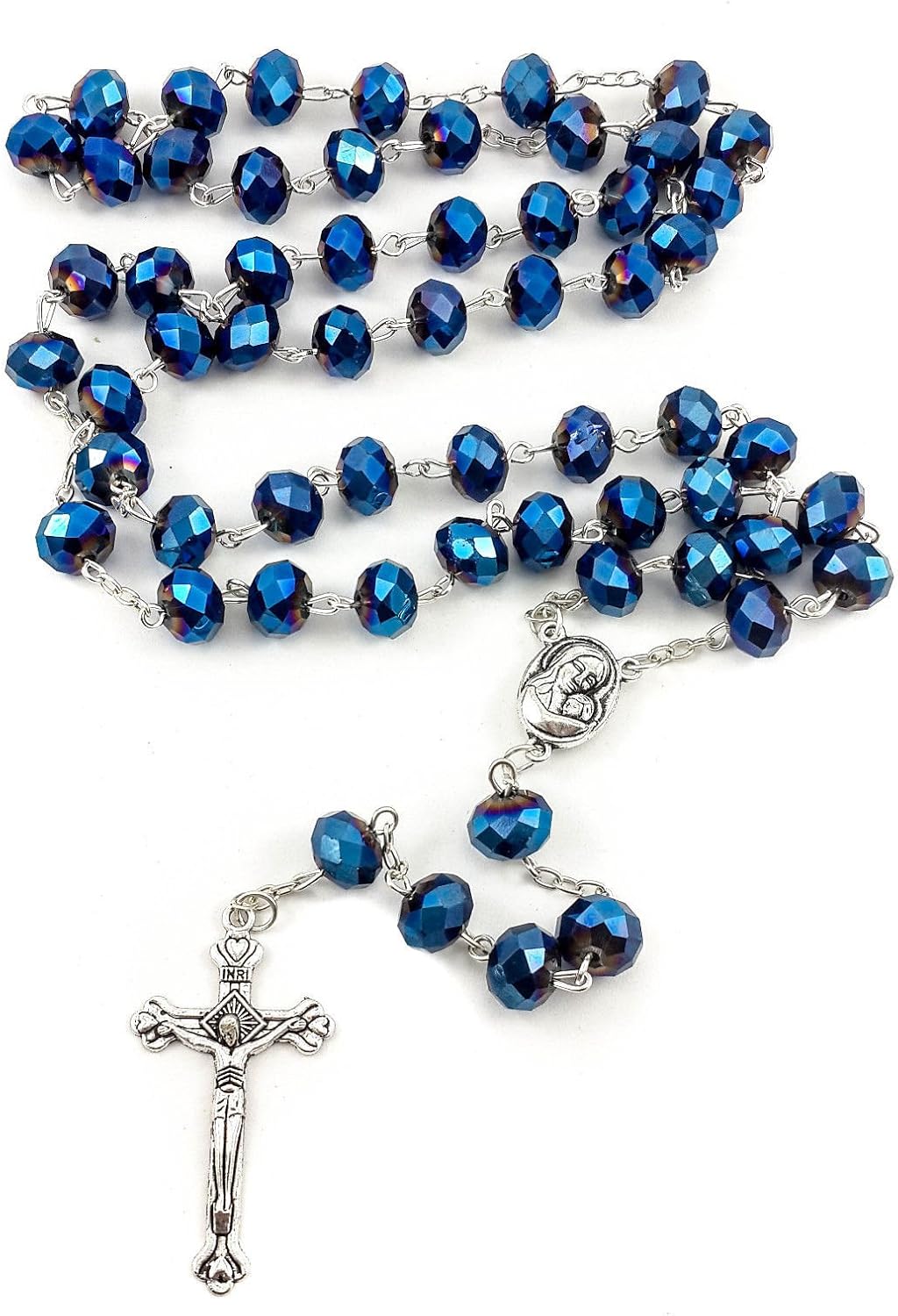
Another natural way to use Episcopal Rosary Beads is during Eucharistic adoration or a quiet visit to a chapel. Some people are very comfortable praying the full traditional Rosary there, while others sometimes feel drawn to a more open, wordless kind of prayer. Holding a strand of beads can support both. When my mind starts to wander, I find that simply touching the next bead reminds me to return my attention to the Lord, even if I am not reciting a set formula.
For Catholics who enjoy praying with Scripture, these beads can also hold short passages from the Gospels or the psalms. You might choose a single line from the Sunday Mass readings and repeat it on each bead, allowing it to sink more deeply into your heart. Over time, certain verses become familiar companions, and the beads feel like they are carrying those words with you into the rest of your week.
Materials, Styles, And Quiet Reverence
Episcopal Rosary Beads come in many materials: wood, stone, glass, metal, or simple cord. The choice often has less to do with appearance and more to do with how you want them to feel in your hands. Wood can be warm and light, stone can feel cool and substantial, and glass can have a gentle weight that moves slowly through the fingers.
I have owned a few different sets over the years. One simple wooden strand has become my favorite for travel because it is sturdy and not flashy. Another, with small stone beads, stays near my reading chair at home. I do not think much about how they look to others. What matters more to me is that, when I pick them up, they encourage a spirit of quiet reverence and attention.

Some Episcopal Rosary Beads have a plain cross; others include a crucifix with the body of Christ, which may feel more familiar to Catholics. Some have small medals with symbols of the Holy Spirit, the Virgin Mary, or a particular saint. None of these details are magical or necessary. They are simply ways of surrounding ourselves with gentle reminders of the faith we already hold.
Over time, a set of beads can pick up a kind of personal history. The cord may soften, the metal may darken slightly, or the wood may become smoother where your fingers most often rest. Those small signs of wear can be comforting. They show that these prayers have been carried through real days of work, worry, gratitude, and ordinary obligations.
Ideas For Personal Prayer With Episcopal Rosary Beads
There is no single “right” way for a Catholic to pray with Episcopal Rosary Beads. Still, it can be helpful to have a few gentle patterns to choose from, especially when you are just beginning. Here are a few simple approaches that have fit naturally into my own life and the lives of friends who pray in a similar way.
- A day’s intention on each bead. Begin by naming one person or situation you want to hold before God. On each bead, repeat a short prayer like “Lord, be near” while quietly remembering that intention. When you come full circle, end with a simple “Thank you, Lord” or the Our Father.
- A psalm verse as a refrain. Choose one line from a psalm that speaks to you—something like “The Lord is my shepherd” or “Into your hands I commend my spirit.” Repeat it slowly on each bead, letting the words take root.
- Breathing and the Holy Name. On the in-breath, quietly say “Lord Jesus,” and on the out-breath, “have mercy on me.” Move one bead for each cycle. This can be especially steadying during a stressful day.
- Quiet gratitude. On each bead, name one small thing you are thankful for: a person, a memory, a moment in your day. There is no pressure to cover everything. The beads simply help you stay focused long enough to notice more gifts than you might have otherwise.

I have found that certain seasons of life call for different patterns. When someone in my family has been sick, I tend to lean toward very simple prayers of trust and surrender. In quieter times, I might use the beads to linger over a Gospel story, repeating a line Jesus speaks and imagining myself in the scene. The beads do not dictate what I must pray; they simply hold the space for prayer to unfold.
Personal Experiences With Episcopal Rosary Beads
One particular season stands out in my memory. I was going through a stretch of weeks when sleep would not come easily. My thoughts kept circling around worries I could not fix overnight. A friend had given me a small set of Episcopal Rosary Beads, and one of those nights I picked them up from the nightstand almost without thinking.
I decided, very simply, that I would repeat just one prayer on each bead: “Lord, you know.” I did not explain everything in words. I just held each worry, one at a time, and quietly trusted that God understood what I could not articulate. By the time I had moved all the way around the circle, I was not suddenly free of concern, but I did feel a little less alone in it.

That experience did not solve the situation I was facing, but it did shape the way I walked through it. The beads became a physical reminder that I could turn to God again and again, even in the middle of the night, without having to find new words. Over time, that simple practice settled into my routine. Now, whenever I notice the tension building in my shoulders or my thoughts racing, I know that picking up the beads is one small way to step back into a more honest conversation with God.
Another memory I hold with gratitude involves sitting in a hospital waiting room while a loved one was in surgery. I had my regular Catholic rosary in one pocket and Episcopal Rosary Beads in the other. I prayed a traditional Rosary first, moving through the mysteries I had learned as a child. Then, when my mind felt too tired for more structured prayer, I slipped the other beads into my hand and simply repeated, “Into your hands.” The different sets of beads did not compete with each other; they carried me through in different ways.
Respecting Tradition While Using Episcopal Rosary Beads
For Catholics who care deeply about tradition—and I count myself among them—it can feel delicate to pick up a form of prayer that grew in another Christian community. It may help to remember that the use of beads for prayer stretches back many centuries and has taken many shapes. The heart of Catholic life remains the Mass, the sacraments, and the faith handed down through the Church. Personal devotions, including how we use beads, are meant to support that, not replace it.
When I use Episcopal Rosary Beads, I do so as a Catholic who loves the Rosary I received from my grandparents and still prays it often. These additional beads do not change what I believe. They simply offer another gentle way to slow down, breathe, and place my thoughts before God. That sense of continuity with tradition matters to me. I do not treat any new devotional practice lightly, but when it helps me be more faithful in the small, hidden corners of daily life, I receive it with gratitude.
In the end, each of us has to discern which devotions truly help us live the faith more deeply and which ones might simply be distractions. Some Catholics may feel drawn to Episcopal Rosary Beads; others may prefer to remain with the familiar patterns they have always known. Both paths can be faithful. What matters is the sincerity with which we seek God in the midst of our actual lives—our families, our work, our joys, and our sorrows.
FAQ About Episcopal Rosary Beads
Are Episcopal Rosary Beads appropriate for Catholics to use?
Many Catholics quietly use different kinds of prayer beads, including Episcopal Rosary Beads, as part of their personal devotions. They do not replace the Mass, the sacraments, or the traditional Catholic Rosary, but they can serve as another way to focus the mind and heart on God. If you choose to use them, you can do so with a spirit of respect for Catholic teaching and tradition, seeing them as a tool for personal prayer rather than a new form of worship.
How are Episcopal Rosary Beads different from a traditional Catholic Rosary?
A traditional Catholic Rosary has five decades, each with ten small beads, and is closely tied to specific mysteries from the lives of Jesus and Mary. Episcopal Rosary Beads usually have four groups of seven beads, separated by larger beads, plus an invitatory bead and a cross. They are often used with shorter, repeated prayers or Scripture verses rather than the fixed pattern of Hail Marys and Our Fathers. Both forms encourage steady, repetitive prayer, but their structures and typical devotions differ.
Can I pray the regular Catholic Rosary on Episcopal Rosary Beads?
Because Episcopal Rosary Beads are arranged differently, it is not straightforward to pray the complete traditional Rosary on them bead-for-bead. Some people adapt the pattern and simply use the beads as a rough guide, while others reserve Episcopal beads for shorter, meditative prayers and keep a standard rosary for the full set of mysteries. There is nothing wrong with adapting them if it helps you, but it may be simpler to let each kind of beads serve its own purpose.
Do Episcopal Rosary Beads need to be blessed?
As with any object used for prayer, Catholics often appreciate having their beads blessed by a priest. The blessing does not turn the beads into a charm or guarantee any particular outcome; it is a way of entrusting their use to God and recognizing that they are set aside for a sacred purpose. If you begin praying regularly with Episcopal Rosary Beads, you may find it meaningful to ask your parish priest for a simple blessing.
How do I start praying with Episcopal Rosary Beads if I feel unsure?
You do not need a complicated formula to begin. You might start by making the sign of the cross, then choosing a short prayer you already know well—the Our Father, the Jesus Prayer, a psalm verse, or a simple “Lord, have mercy.” Repeat that same line on each bead, moving slowly and breathing naturally. If your mind wanders, gently return to the words and the next bead. Over time, you can explore other patterns, but even this very simple approach can support a quiet, honest conversation with God.
If you feel drawn to pray with your hands as well as your heart, you may find it helpful to look through different Episcopal Rosary Beads and notice which ones seem to invite you into quieter, more attentive moments with God.
I’ll explore them slowly