
Are Rosary Beads in the Bible
Many Catholics eventually wonder if the rosary, and especially the beads themselves, can be found in Scripture. The question “are rosary beads in the Bible” usually comes from an honest desire to stay close to God’s word while living the traditions we have received.
Wondering Where Rosary Beads Come From
When we ask, are rosary beads in the Bible, we are really asking about the heart of our prayer life. We want to know whether this familiar string of beads that rests in our hands has any real connection to the pages of Scripture, or if it is something we quietly picked up along the way.
The simple truth is that the Bible never mentions rosary beads by name. There is no verse that tells us to hold a crucifix at the end of a chain, or to move from bead to bead. Yet the spirit of the rosary is deeply rooted in Scripture: meditating on the life of Christ, repeating words from the Gospel, and letting prayer settle into a steady rhythm that carries us through our days.

I remember the first time I really thought about this question. I was sitting in a quiet chapel during a difficult season of life, holding a worn set of beads that used to belong to a relative. I caught myself wondering if I was somehow adding something extra to my faith that God did not ask for. That small doubt nudged me to look more closely at what I was doing when I prayed the rosary.
The more I prayed, the more I realized that the rosary was not pulling me away from the Bible at all. Instead, it was gently leading me back into it. The words of the Hail Mary echo the Gospel of Luke. The Our Father comes directly from Christ’s own teaching. The mysteries walk through events in the life of Jesus that are found in Scripture. The beads simply help my distracted mind stay with the prayer long enough for it to sink in.
Biblical Roots Behind a Non‑Biblical Object
Even though the object we call “rosary beads” is not described in Scripture, the ideas behind it are very biblical. Repetition in prayer, remembering God’s works, and using physical things to support spiritual focus all appear in the Old and New Testaments.
The Psalms, for example, repeat phrases again and again in praise and lament. Saints and prophets in the Bible speak of “meditating” on God’s law and remembering His deeds. In the Gospels, Jesus Himself tells us to “ask,” “seek,” and “knock,” using persistent, simple prayer. None of this proves that God commanded rosary beads, but it does show that a prayer like the rosary is not out of tune with Scripture.
There is also a long Christian habit of using the hands to help the heart stay focused. Long before modern rosary beads appeared, Christians were counting prayers on knotted cords or simple stones. That practice eventually grew into more structured devotional tools. Over time, the rosary, as we know it today, took shape out of love for Christ and a desire to remember His life in detail.
So when we quietly ask, are rosary beads in the Bible, we might rephrase the question this way: does the Bible support patterns of prayer, meditation on Jesus, and the use of simple objects to help us stay attentive to God? In that sense, the answer is yes, even if the form we hold in our hands developed later in history.
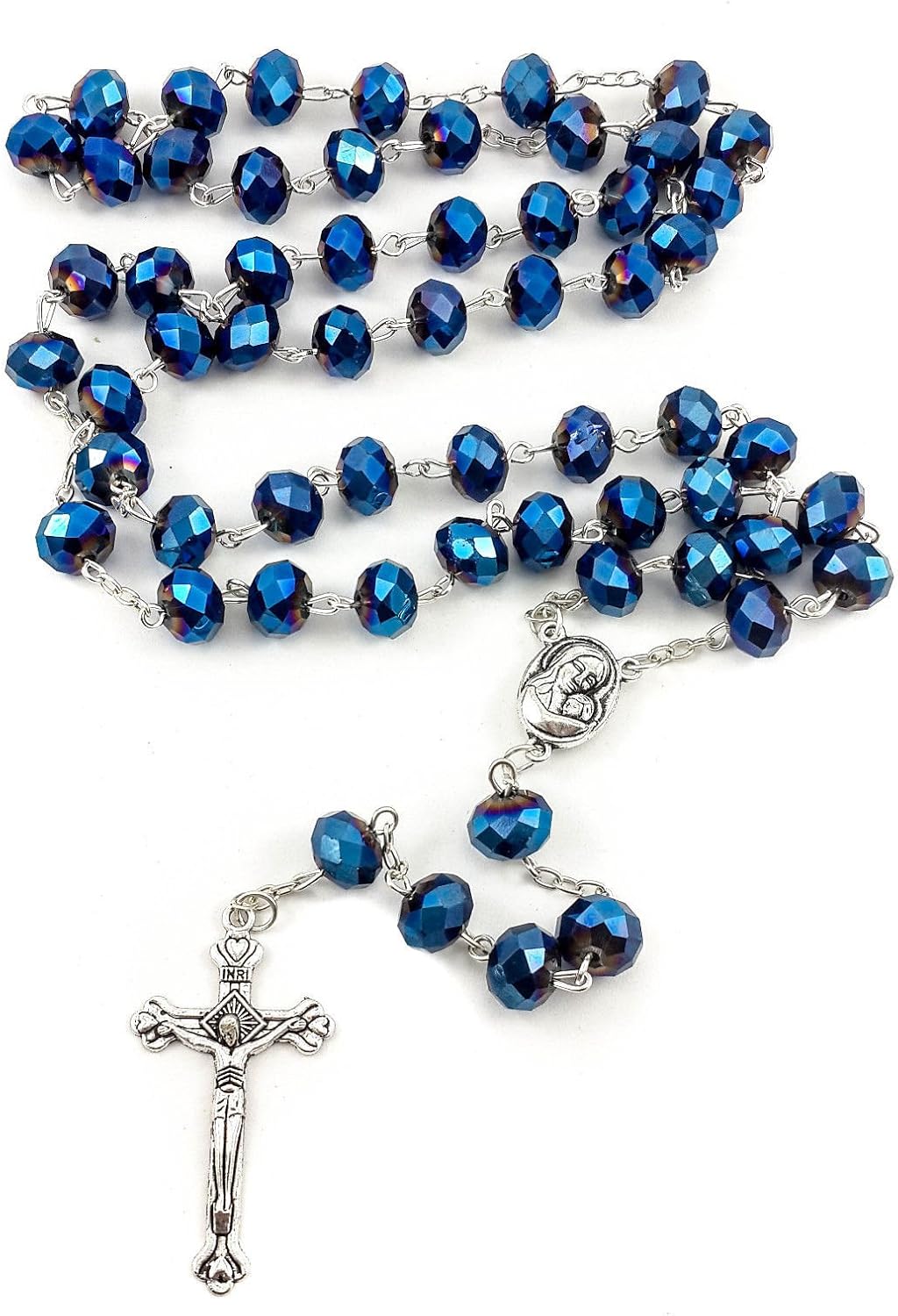
Scripture, Memory, and the Work of Our Hands
The Bible takes our bodies seriously. Clothes, oil, water, bread, wine, and even simple cords and tassels appear as reminders of God’s presence and promises. The people of Israel were instructed to wear tassels on their garments to remember the commandments. That practice does not match rosary beads directly, but it shows that God understands our need for physical reminders.
Some Christians see the rosary as one more way to live that same human truth: our fingers sometimes need something to touch when our hearts are trying to pray. The beads are not magical. They do not replace Scripture, church life, or personal conversation with God. They are just a support, like a bookmark or a highlighted verse, keeping us from drifting away in the middle of our prayer.
More than once, I have sat down meaning to read the Bible, only to realize my mind was scattered and tired. On those evenings, I would start with a decade of the rosary, slowly moving through the beads while picturing a scene from the Gospel. By the time I finished, my heart felt calmer, and I was finally ready to open the Bible and sit with the text.
How Rosary Beads Fit into Everyday Catholic Life
In daily life, rosary beads often feel less like a religious object and more like a familiar companion. They sit on nightstands, rearview mirrors, desks, and kitchen tables. Many of us pick them up almost without thinking during quiet moments, car rides, or a short walk around the block.
Asking “are rosary beads in the Bible” is not just a matter of history. It is also a question about whether this little habit of reaching for beads has a place in a faith that takes Scripture seriously. For many Catholics, the answer shows up in the way the beads lead them back toward Christ, toward the Gospels, and toward a quieter, more reflective way of living.

In my own routine, I keep a simple set of beads in my pocket. They are nothing fancy, and the metal has already started to show a bit of wear. On busy workdays, I sometimes slip a hand into my pocket and quietly pray just one decade while walking from one task to another. It does not solve every problem or erase every worry, but it nudges my attention back to Jesus, even in crowded, ordinary spaces.
Many families have their own traditions around the rosary. Some pray together in the evening. Others choose one decade before bed, especially with young children. The beads give everyone something to hold, which can be comforting, especially for kids who are still learning how to focus during prayer. In this way, rosary beads serve as a gentle bridge between home life and the stories of the Bible that shape us.
Choosing Rosary Beads with Intention
Since the question is not “must I use rosary beads” but rather “how can they support my prayer,” it can be helpful to choose beads that quietly fit your life. Some prefer sturdy, simple designs that can handle pockets and backpacks. Others appreciate wood or stone that feels natural and grounding in the hand. A few people like metal or glass that catches the light and reminds them of church windows.
Intention matters more than appearance. What helps one person pray may distract another. The important thing is whether the beads gently encourage you to turn toward God and the mysteries of Christ’s life. Nothing about them should replace Scripture; instead, they can help create small spaces of stillness where the words of the Bible can echo more deeply.

Over the years, I have used different rosaries: one wooden set that came on a retreat, a delicate one from a family member, and a simple cord rosary that I carry while traveling. Each one marked a slightly different season of life. What stayed the same was the way the beads helped me show up for prayer on days when my mind was tired or my heart was restless.
“Are Rosary Beads in the Bible?” and the History of the Rosary
Historically, the rosary as we know it developed many centuries after the New Testament was written. Christians have always been people of memory, retelling the story of Jesus in many different ways: preaching, liturgy, art, music, and personal devotions. The rosary is one of those devotions, shaped gradually within the life of the Church.
Scholars trace the roots of counting prayers back to early Christian monastic communities, where monks and lay people sometimes used knotted ropes to mark off repeated prayers. Over time, different patterns emerged, and eventually the familiar set of decades focused on key Gospel events took shape. That is why historians usually say that the rosary is not a biblical object but a later development grounded in faith in Christ and His saving work.
If you want to read more about where traditions like this fit in Christian history, it can be helpful to look at how the early Church grew after the time of the apostles, and how devotions formed as believers tried to live the Gospel in their own cultures. This larger story includes the rise of the Holy Rosary, which shows how a simple tool for prayer slowly became familiar to Catholics around the world.

Knowing this background can ease certain worries. We do not need to pretend that the Bible directly commands rosary beads. Instead, we can recognize them as a humble fruit of centuries of prayer, especially among ordinary people who wanted a simple way to stay close to the story of Jesus in the middle of daily responsibilities.
For someone who feels tension between loving the Bible and loving the rosary, it may help to see the rosary as a doorway, not a destination. The beads themselves are not the center. They simply guide us through scenes from Scripture, one bead at a time, until we have quietly walked through moments like the Annunciation, the Nativity, the Crucifixion, and the Resurrection.
Using Rosary Beads to Pray with Scripture
One gentle way to stay grounded in the Bible while praying the rosary is to keep a passage of Scripture nearby. Some people read a few verses before each decade, letting those words shape their meditation on the mystery. Others keep a small Bible or app open and glance at the text between decades.
When we do this, the answer to “are rosary beads in the Bible” becomes less about objects and more about habits of the heart. The beads become a small frame around scenes from the life of Jesus that are clearly found in Scripture. Our fingers move, but our minds and hearts rest in the words and deeds of Christ.
I have found that even on days when I cannot manage a full rosary, a single decade prayed slowly, with one Gospel scene in mind, can make a difference. For example, reflecting on the Wedding at Cana while holding the beads has helped me bring my own family concerns quietly before God, without many words. On another day, reflecting on the Resurrection has brought quiet hope when the future felt uncertain.
The beads do not do the work for us. They simply support our intention to pray. Like a walking path worn into the grass after many footsteps, the rosary creates a familiar route for the heart to return to, especially when we feel lost or unsettled.
Caring for Rosary Beads as a Sign of Reverence
Because rosary beads are used for prayer, many Catholics treat them with a certain quiet respect. That does not mean they must be expensive or fragile. It simply means we remember what we are doing when we pick them up. Keeping them in a clean place, avoiding tossing them carelessly, and repairing them when they break can all be small acts of reverence.

I once had a rosary snap while I was traveling. Tiny beads rolled across a hotel room floor. I gathered them as best I could and later took the pieces to someone who knew how to repair them. It reminded me that these small objects, even when simple and inexpensive, have walked with us through many prayers, tears, and quiet moments of trust. Treating them gently is one way of honoring that story.
Some people keep different rosaries in special places: one near a favorite reading chair, one by the bed, one in the car. Each set of beads becomes a quiet reminder that prayer can fit into many corners of the day. In all of this, our focus remains not on the beads themselves but on the One we turn toward while holding them.

Questions About Rosary Beads and the Bible
No, rosary beads are not mentioned by name in Scripture. The Bible does not describe strings of beads or instruct believers to use them. The rosary developed later in Christian history as a way to meditate on events from the life of Christ that are found in the Bible, especially in the Gospels.
Many Catholics see rosary beads as a simple tool that supports prayer, not as a requirement or replacement for Scripture. The important question is whether they help you draw closer to Christ and His teachings. If they support your focus and reverence, they can fit naturally within a life shaped by the Bible.
One gentle approach is to connect each decade with a specific Bible passage. You can read a short verse before beginning the decade, or picture a scene from the Gospel while moving from bead to bead. Over time, this habit can help your mind and heart stay rooted in the words and stories of the Bible while you pray.
No, the prayer itself does not depend on the beads. Some people pray the rosary on their fingers or simply keep count in their minds when beads are not available. The beads are there to support our human weakness and distraction, but God listens to prayer with or without them. They are a help, not a requirement.
It can be helpful to look for rosary beads that feel comfortable in your hand and fit your real daily life. Some prefer sturdy materials for frequent use, while others choose lighter or more delicate beads for home prayer. Above all, choose something that quietly invites you to pray and does not distract you from the mysteries of Christ and the words of Scripture.